Last reviewed
Who to Pitch: Finding Venue, Radio, Playlist and Music Supervisor Contacts
The short version
Most pitches die before anyone presses play, because they went to the wrong person. A talent buyer who books metal isn't going to book your folk set. A supervisor who only licenses library cues won't reply to your pop single. And a curator whose playlist is half bots won't move your numbers even if they add you.
So the work has two halves. First, find the specific people who already say yes to music like yours. Second, send them something they can hear in ten seconds, and know when they did.
This post covers both. For the first half I lean on four tools from the team behind Booking-Agent.io. The second half is what I built DropCue to do.
Disclosure: DropCue and Booking-Agent.io have a cross-promotion partnership, and DropCue users get 50% off their tools with code DROPCUE50. Nobody paid for this post, and I'm only describing what their products say they do.
Why "similar artist" beats a big contact list
The old way was to buy a spreadsheet. Five thousand venues, two thousand stations, a PDF of music supervisors. Those lists go stale within months, and they tell you nothing about taste.
A reference artist is a much better starting point. If a venue booked someone who sounds like you last spring, that's a warm lead. If a station is spinning an artist in your lane this week, the program director already likes that sound. If a supervisor placed a track close to yours last season, they're the name worth your one email.
All four tools below work that way. You type an artist, genre or keyword, and they search live data for the people already saying yes to it.
Live shows: talent buyers and venues
Booking-Agent.io is a search engine for touring artists, managers and agents. You search by similar artists to find venues already booking your genre, see them on a map for routing, and unlock verified contacts for the talent buyers and booking teams.
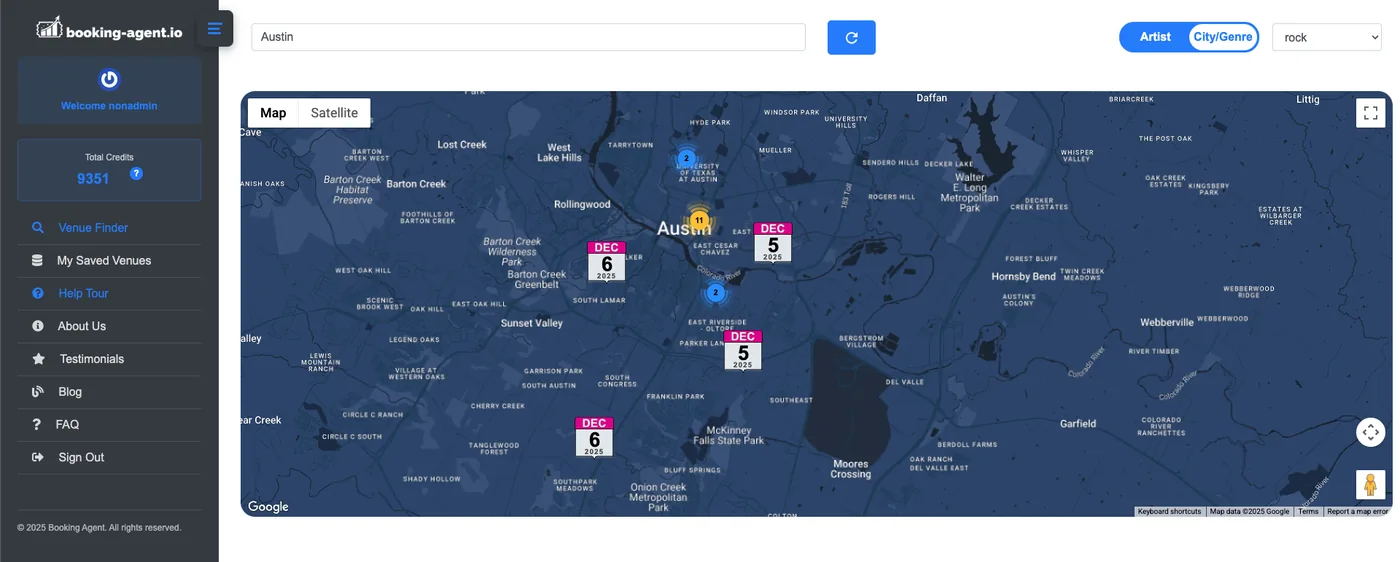
The map is the part I'd plan around. Routing a run of dates is a geography problem, and seeing every relevant room clustered by city makes the gap between two anchor shows obvious. If you've never routed a run yourself, their guide on how to book your own tour walks through it step by step.
Where DropCue fits: a buyer wants to know two things. Can you draw, and what do you sound like live? Your DropCue EPK puts your bio, photos, live video and tracks behind one link, and it tells you which buyer opened it.
Radio: program directors and DJs
RadioPromo.io does the same thing for airplay. Enter an artist or genre, and it finds stations playing similar music right now, along with the program directors and DJs behind them and their verified contact details.
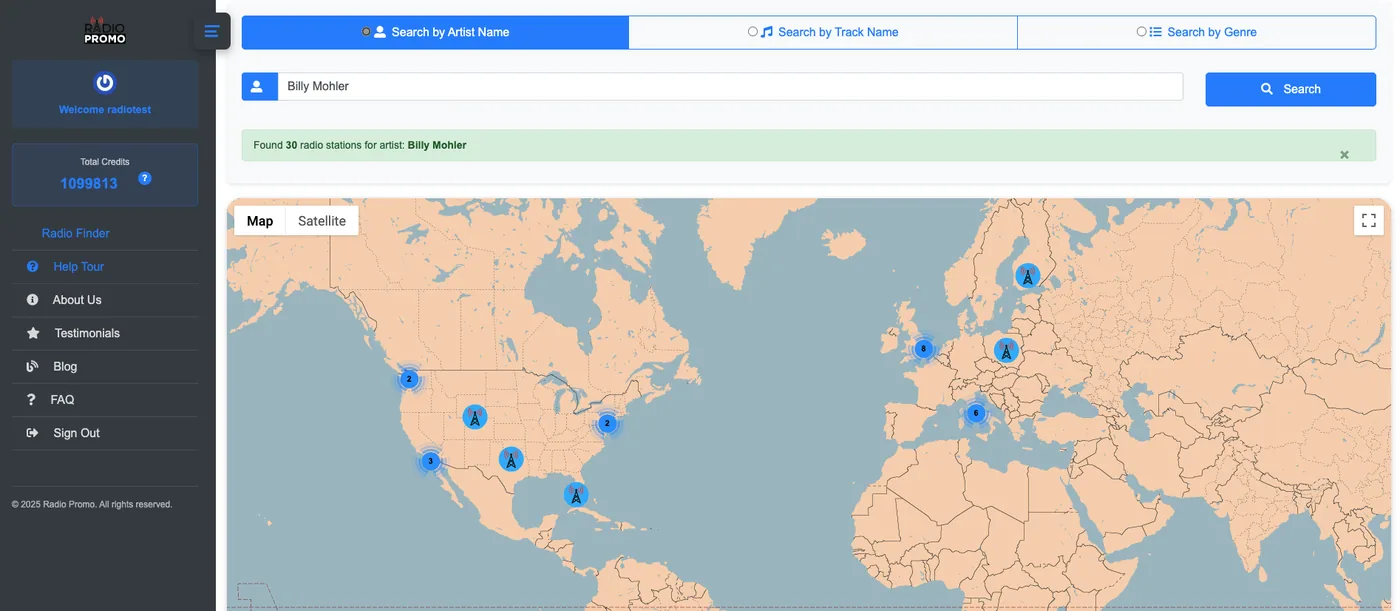
This matters most if you can't justify a traditional radio campaign. College, community and specialty shows are exactly where a direct, well-targeted email still works. RadioPromo's guide to getting your music on the radio covers how each station type works.
Where DropCue fits: send one track as a DropCue link with the radio edit on top. Set a snippet so it starts on the hook, because nobody at a station is listening from the top.
Playlists: curators worth pitching
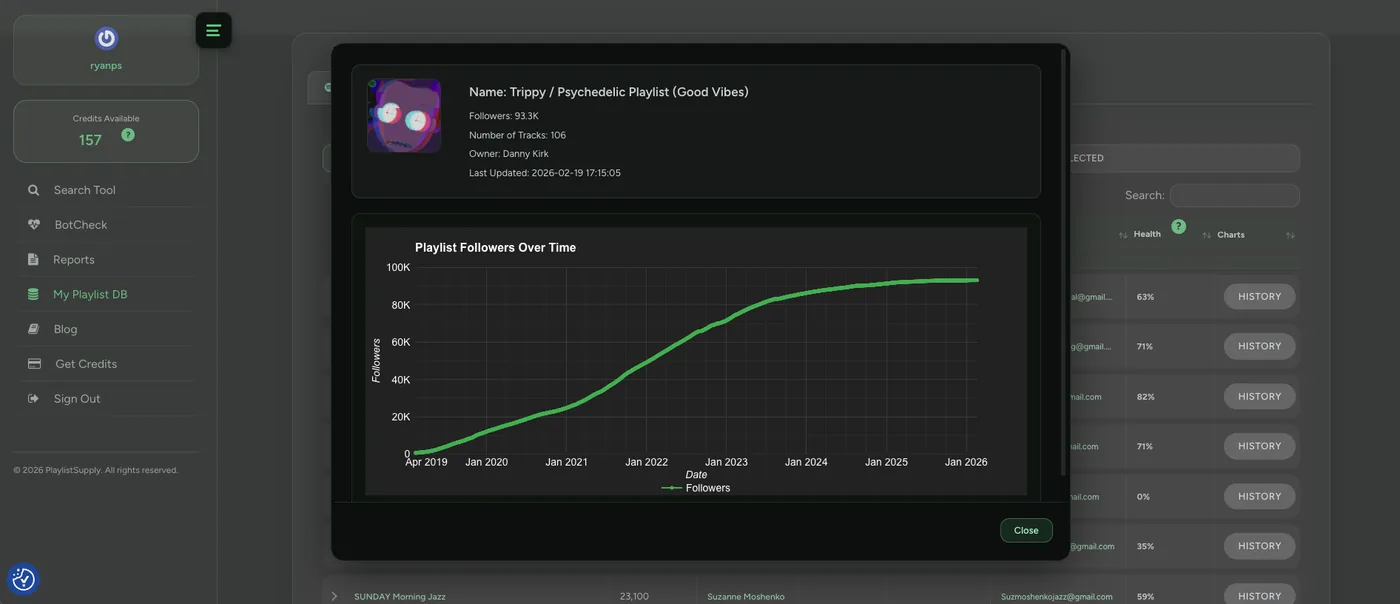
PlaylistSupply finds Spotify and YouTube playlists by artist, genre, mood or keyword, then helps you track down the curator's contact details.
The feature I like most is the vetting. PlaylistVet, their free playlist checker, checks whether a playlist is legit by comparing its featured artists against Spotify's "Discovered On" data, which is how you avoid chasing a playlist that's mostly bot traffic. A spot on a fake playlist is worse than no spot at all, because it can hurt you with the algorithm. The problem is big enough that Spotify removed more than 75 million spam tracks in a single year.
Where DropCue fits: curators want an unreleased track they can hear before release day. A password-protected DropCue link with downloads switched off lets them listen without your master floating around.
Sync: music supervisors
SyncPlacement is a music supervisor search built on real placement data. You search by genre, mood, reference artist, or a specific show, film or game, filter by TV, film, games or ads, and see which supervisors placed what and how recently.
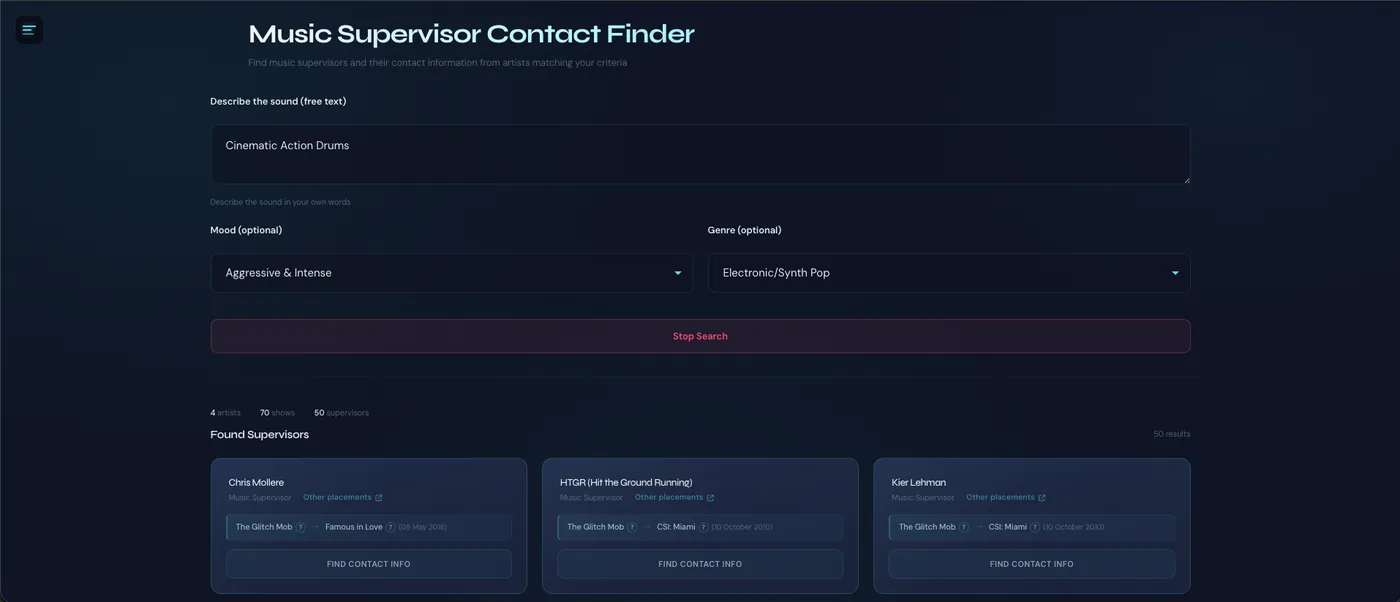
That recency matters. A supervisor who placed something like yours last month is a far better target than one who worked on a show you liked five years ago. Search is unlimited, and you only spend credits when you unlock a verified contact. Before you quote a fee, check SyncPlacement's sync licensing fee guide for what placements typically pay.
Where DropCue fits: this is the channel DropCue was built for. Send a professional playlist with instrumentals and alt mixes nested under each main mix, and clean metadata. Say whether you're one-stop in the message itself, because it's the first thing they'll check after the fit. If you're new to sync, read how to pitch music supervisors and what music supervisors want before you send anything.
What to send once you have the contact
Finding the right person is half the job. The other half is what lands in their inbox.
| Who you're pitching | What they need first | What to send from DropCue |
|---|---|---|
| Talent buyer | Can you draw, and how you sound live | EPK with live clips and past shows |
| Radio programmer | The single, clean and radio-ready | One track link, radio edit on top, snippet on the hook |
| Playlist curator | Whether it fits the list | One track, password-protected, downloads off |
| Music supervisor | Whether it fits the scene, and whether it clears | Playlist with instrumentals and full metadata |
Three rules hold across all four:
1. Never attach audio. Big attachments bounce, and nobody downloads an unknown MP3. Send a link that plays in the browser. 2. Lead with the best thirty seconds. Nobody listens from the top. Put the hook first, or set a snippet. 3. Know who actually listened. If you can't tell who pressed play, your follow-up is a guess.
That third rule is the whole reason DropCue exists. Every share link and playlist tracks plays per recipient, so you know which buyer opened your EPK and which supervisor played track three twice. You follow up with the people who engaged, while it's fresh, and leave everyone else alone. There's more on timing in how to follow up after a music pitch.
A simple weekly workflow
1. Monday: pick one channel for the week (venues, radio, playlists or sync) and one reference artist. 2. Search that artist in the matching tool and shortlist ten to twenty real targets. Add them to your DropCue contacts so every listen gets tied to a name. 3. Build one DropCue link for that channel: an EPK for buyers, a single for radio and curators, a playlist for supervisors. 4. Send short, personal emails, one per contact, each saying why they specifically fit. You can send them straight from DropCue's email campaigns so the opens and plays land in one place. 5. Friday: check who listened and follow up only with them. On Studio, log the live ones in Pitch Pipeline so nothing warm goes cold.
Ten well-chosen contacts and a link that tells you who listened will beat five hundred cold emails with an attachment. Every time.
Discount for DropCue users
Use code DROPCUE50 for 50% off Booking-Agent.io, PlaylistSupply, RadioPromo.io or SyncPlacement.
If you're not on DropCue yet, start a free trial and build your first pitch link today.
FAQ
How do I find a music supervisor's email?
Start from placements, not lists. Find shows, films, games or ads that used music like yours, identify the supervisor credited on them, and prioritize the ones with recent placements. SyncPlacement does this search directly and unlocks verified contacts with credits. Then send one short email with a streaming link, like a DropCue playlist, never an attachment.
How do independent artists book shows without an agent?
Find venues that already booked artists similar to you, contact the talent buyer directly, and send an EPK with live footage and past shows. Booking-Agent.io searches venues by similar artist and maps them for tour routing, and their guide on how to book your own tour covers the rest. A DropCue EPK shows you which buyers actually opened it, so you know who to follow up with.
How can I tell if a Spotify playlist is fake?
Look at whether the artists on it actually gained listeners from it. Spotify's "Discovered On" data shows which playlists drive real listeners to an artist, and PlaylistSupply's free PlaylistVet checker uses that to flag playlists with bot or inactive audiences. A spot on a fake playlist can hurt your standing with the algorithm.
Should I email radio stations directly?
Yes, especially college, community and specialty shows. Target stations already playing artists like you, email the program director or show host by name, and send one track as a streaming link with the radio edit first. RadioPromo.io finds the stations already spinning artists like you.