
Last reviewed
Sync Licensing for Beginners: How to Land Your First Music Placement
Sync licensing for beginners sounds intimidating until you realize it is just permission to pair your music with a picture. Every time a song plays under a Netflix scene, a car commercial, a YouTube ad, or a TikTok brand campaign, someone licensed that music. That deal is a \"synchronization\" license, and composers, songwriters, and producers get paid for it. This guide breaks down what sync licensing actually is, the two separate licenses involved, and the exact steps a complete beginner takes to land a first placement. No manager, no label, no industry cousin required.
The barrier to entry is lower than it has ever been. You do not need a publishing deal. You need finished music, the rights to it, and a way to pitch it that does not make a supervisor wince. Let's get into it.
What is sync licensing for beginners?
Sync licensing is the business of getting your music placed in visual media (film, TV, ads, video games, trailers, and online content) in exchange for a fee and ongoing royalties. \"Sync\" is short for synchronization, because your music gets synced to a moving image.
Here is the part nobody explains clearly: a single placement usually requires two separate permissions, because two different things are being licensed. Get this straight and you are already ahead of half the people who call themselves \"sync musicians.\"
When a music supervisor wants your track, they need a green light from whoever owns the song (the composition) and whoever owns the specific recording (the master). If you wrote and recorded your own track in your bedroom, congratulations: you control both. That makes you the easiest person in the world to license from, which is exactly why self-produced composers do so well in sync.
Sync license vs master license: the two rights you actually sell
A sync license covers the underlying composition: the melody, chords, and lyrics. The songwriter or their publisher grants it. A master use license covers the actual sound recording, the specific performance captured in the file you uploaded. Whoever owns that recording grants it, often a label, or in your case, you.
Think of it like cooking. The composition is the recipe. The master is the finished dish. A production needs permission to use both. When a supervisor licenses a famous song but reaches for a cheaper re-recording, that is the two rights splitting apart in real time.
For a beginner who owns 100 percent of their music, both licenses come from the same person. You sign one agreement, you get paid, and you keep your rights. This is the single biggest advantage independent composers have, and it is why platforms built around independent catalogs matter. Once placements start coming, the DropCue Royalty Tracker logs every sync fee and performance royalty alongside the rights you granted, so nothing slips through the cracks and you can see exactly what each placement pays you over time.
What do I need before pitching for sync?
Before you pitch anything, you need finished, broadcast-quality music that you fully own or control. That means mastered audio (usually a clean WAV) and clear documentation that you wrote and own every element, including any samples, features, or co-writers.
Here is the checklist that actually matters:
- Finished, mastered tracks. Supervisors license what they hear. Demos and rough mixes get skipped. Deliver mastered WAV files, ideally with instrumental and stem versions ready, since productions constantly need a version without vocals.
- Clean ownership. If a collaborator played on it, sang on it, or co-wrote it, get the splits in writing before you pitch. An uncleared sample is the fastest way to kill a placement.
- Metadata. Embed your contact info, song title, writer names, and PRO affiliation into the file. Supervisors move fast, and a track with no contact info is a track that never gets cleared.
- A PRO registration. Register your songs with a performing rights organization like ASCAP, BMI, or SESAC so you collect performance royalties when your placement airs. The MLC and SoundExchange handle other royalty streams in the US.
- A way to pitch professionally. A folder of MP3 attachments is not a pitch. You need branded, streamable links so a supervisor can listen, browse your catalog, and respond.
That last point is where most beginners faceplant. You can write a brilliant cue and still look amateur if your delivery is a Dropbox link full of files named \"final_v3_REAL.wav.\" A purpose-built tool like DropCue lets you build branded playlists, share trackable links, and see exactly when a supervisor opened and played your music, so you know who is worth a follow-up.
How do I start in sync licensing?
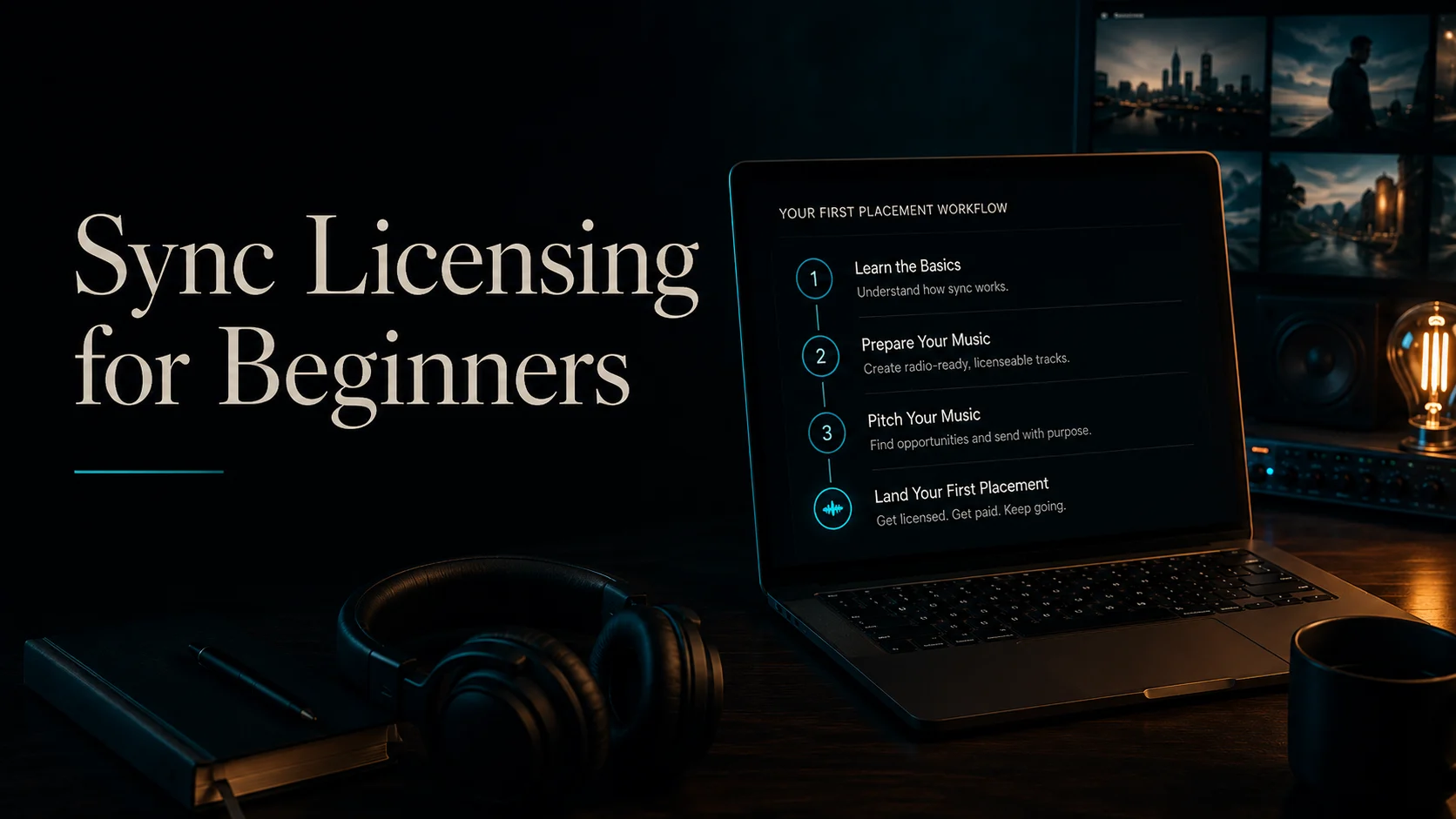
Start by finishing three to five strong, genre-focused tracks, registering with a PRO, then pitching them through libraries, briefs, and direct outreach to music supervisors. Do not try to sound like everyone. Pick a lane you are genuinely great at, whether that is tense cinematic underscore, upbeat indie pop, or trailer-ready hybrid orchestral, and build a tight catalog around it.
Then work the three real paths to placements:
1. Sync libraries and agencies. Companies like Musicbed, Artlist, and Marmoset license catalogs to filmmakers and brands. They take a cut and often want exclusivity, so read the terms before you sign your name to anything. They are a legitimate on-ramp, but you trade ownership leverage for reach. 2. Briefs. Supervisors and libraries post \"briefs\" describing what they need (for example, \"warm acoustic, hopeful, no vocals, 60 seconds\"). Answering briefs that match your strengths is the highest-conversion move a beginner can make, because the buyer already told you exactly what they want. 3. Direct outreach. Find the supervisors and music coordinators on a project and pitch them a tailored playlist. Slower, yes, but it builds the relationships that turn into repeat placements.
The composers who win treat sync like a sales pipeline, not a lottery ticket. Every pitch is a lead, every supervisor is a contact, and every \"not for this, but send me more\" is gold. Keeping all of that in your head does not scale. The DropCue Pitch Pipeline tracks every pitch like a CRM, so you know who has your music, what they passed on, and who to chase this week. That follow-up discipline is what separates one lucky placement from a steady stream of them.
Is sync licensing worth it for beginners?
Sync licensing is worth it for beginners who can write to brief and play the long game, because a single placement can pay a one-time sync fee plus recurring performance royalties for years. Upfront sync fees swing wildly. A small online ad or indie film might pay a few hundred dollars, while a national TV campaign or a major streaming series can pay into the thousands or far more. Library placements often pay less per use but make it up in volume.
The realistic math: most beginners earn little in year one and build from there. What makes it worth it is the compounding. Your catalog keeps working while you sleep, royalties arrive long after the deal closes, and one supervisor relationship can produce placements for years. Streaming pays you a fraction of a cent per play. One sync can change your month.
It is also a real skill you can learn. That is the entire premise of DropCue University, a one-time $99 course on the business of music and sync licensing, built for people who want the playbook without spending three years learning it the hard way. Buyers also get 7 days of full DropCue access included, so you can prep your catalog and start pitching while the lessons are still fresh.
The bottom line: own your music, prep it properly, pitch it like a professional, and keep 100 percent of what you earn. DropCue exists so independent composers can run that entire workflow themselves, from branded portfolio to pitch tracking, at about half the price of legacy tools like DISCO, with zero commission taken on a single placement you book.
For the full picture, read our complete sync licensing guide.
Want the tools that run this end to end? The DropCue Business Suite covers pitching, agreements, license tracking, and royalties in one place.
Frequently Asked Questions
What is sync licensing for beginners?
Sync licensing for beginners is the practice of placing your music in visual media like film, TV, ads, and games in exchange for a fee and royalties. \"Sync\" is short for synchronization, because your music is synced to a picture. Each placement requires permission to use both the composition and the sound recording, and if you wrote and recorded your own track, you control both and can license it directly.
What is the difference between a sync license and a master license?
A sync license covers the underlying composition (the melody, chords, and lyrics) and comes from the songwriter or publisher. A master use license covers the specific sound recording and comes from whoever owns that recording, often a label. A production needs both. If you wrote and recorded your own music, both rights belong to you, so you can grant a single agreement and keep everything.
What do I need before pitching for sync?
You need finished, mastered tracks (clean WAV files), clear ownership of every element including samples and features, embedded metadata with your contact info, and registration with a performing rights organization like ASCAP, BMI, or SESAC. You also need a professional way to deliver music, such as branded, trackable playlist links rather than loose file attachments, so supervisors can listen and respond easily.
How do I get my first sync placement?
Finish three to five strong, genre-focused tracks, register with a PRO, then pitch through three channels: sync libraries and agencies like Musicbed, Artlist, or Marmoset; briefs posted by supervisors that match your style; and direct outreach to music supervisors. Responding to briefs is the highest-conversion path for beginners because the buyer has already described exactly what they want.
Is sync licensing worth it for beginners?
Yes, for beginners willing to treat it as a long game. A single placement can pay an upfront sync fee plus recurring performance royalties for years, and upfront fees can range from a few hundred dollars for small projects to thousands for national campaigns or major streaming shows. Most beginners earn little in year one, but a growing catalog and supervisor relationships compound over time into steady income.