Workflow
How music supervisors review pitches
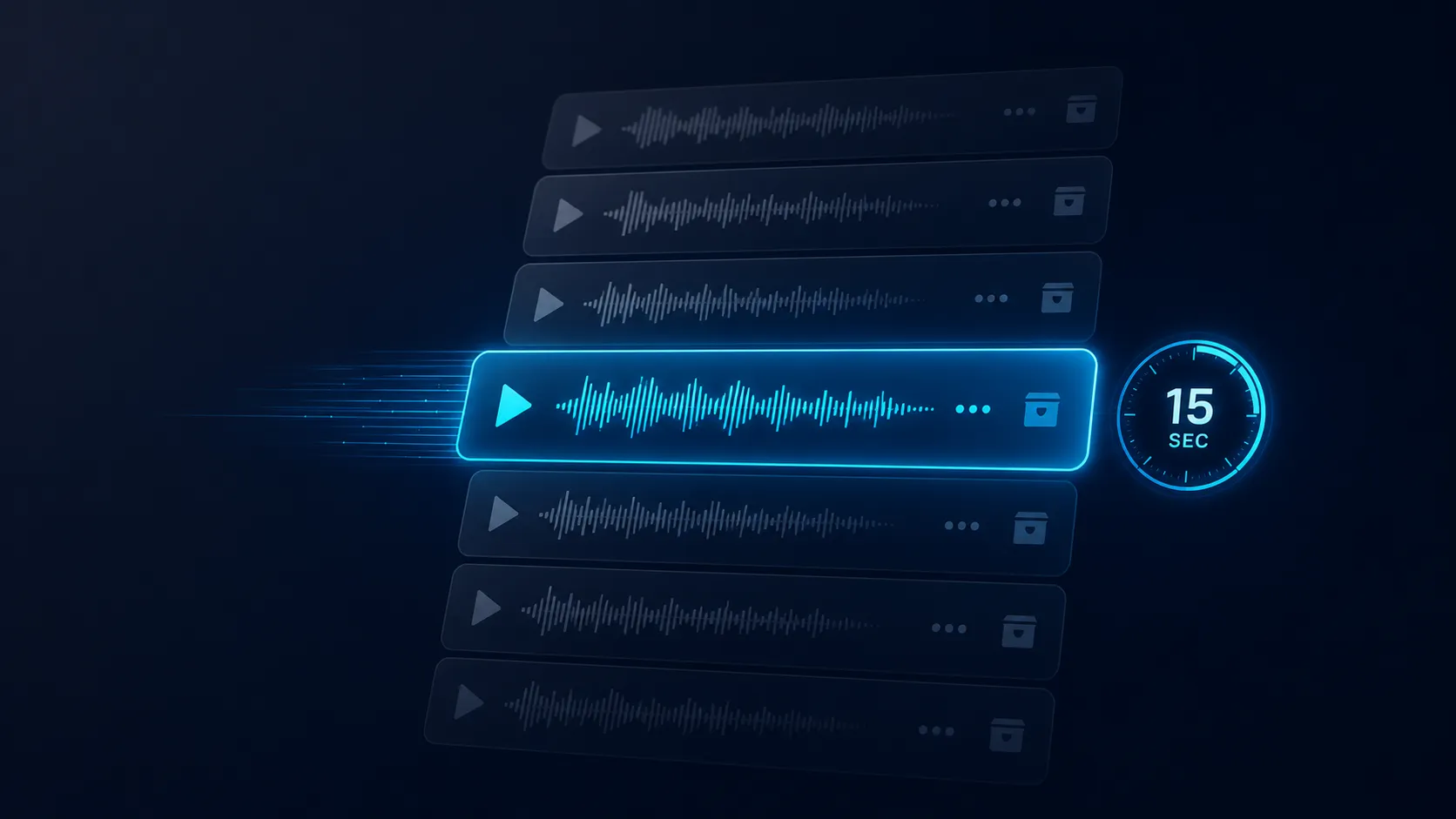
Music supervisors review pitches in fast triage passes, listening to the first 15 to 30 seconds of each track to decide whether it survives, gets archived, or gets forwarded to the director. Most pitches die in the first pass.
A working music supervisor receives 100 to 400 unsolicited submissions a week on top of the briefs they are actively running. The review workflow is built for speed and ruthless filtering, not careful listening. Understanding how the triage actually happens is the difference between getting placed and being archived without a reply.
Who does this
Music supervisors at networks, studios, ad agencies, trailer houses, and freelance supervision companies. Senior supervisors usually have an assistant who runs first-pass triage, but the supervisor still does the second-pass review themselves.
The same workflow shows up at sync agencies and publishers when they decide which composer demos to forward to their supervisor contacts. Different role, same triage instinct.
Step by step
- 1
Open the inbox or pitching platform once a day
Most supervisors batch their pitch review into one block, often early morning before meetings start or late evening after the day is done. Live pitch review during meetings does not happen. If your email arrives at 11 AM on a Tuesday, it sits in queue until the supervisor decides to open the inbox.
- ✓Some supervisors only open the pitch inbox once or twice a week
- ✓Trailer supervisors tend to triage daily because turnaround is faster
- ✓TV supervisors often batch weekly because the brief cycle is longer
- 2
Sort by sender priority before content
A pitch from a known agent or composer goes ahead of cold submissions every time. Established relationships get the first 30 seconds. Cold pitches get whatever time is left at the end of the session, if any.
- ✓Senders the supervisor has placed before get top priority
- ✓Senders the supervisor has met at industry events get second priority
- ✓Cold submissions get whatever time remains, which is sometimes zero
- 3
Read the subject line and first sentence in two seconds
If the subject line says "demo" or "music for you to consider" with no specifics, the supervisor archives without opening. If it references a specific brief, scene, genre, or recent placement, the email survives to step 4.
- ✓Subject lines naming the project earn an open
- ✓Subject lines naming a recent placement earn a reply
- ✓Generic mass-blast subject lines die immediately
- 4
Click the link or open the attachment
Supervisors do not download zip files. They open shareable URLs because they need to listen on whatever device they have in front of them, often a phone in an Uber or a laptop in a hotel. If the pitch is a 40 MB attachment, it is closed without listening.
- ✓Single shareable URL gets opened
- ✓Spotify or SoundCloud links get opened
- ✓Zip files and Google Drive folders get archived
- 5
Listen to the first 15 to 30 seconds of the top track
This is the actual filter. The intro of your top track is the audition. If it does not communicate genre, vibe, and quality inside the first 15 seconds, the supervisor moves on without listening to the second track. Front-load matters more than the bridge.
- ✓Long ambient intros get skipped
- ✓Tracks with vocals starting at 0:30 lose half their pitch window
- ✓Tracks with the hook at 0:08 to 0:12 land more often
- 6
Tag the track or move on
If something works, the supervisor tags it into a mood-based folder or playlist for future briefs. If nothing works, the email is archived and the sender is implicitly demoted in priority for next time. There is no "save for later, listen properly tomorrow." Tomorrow always brings 50 more pitches.
- ✓Tagged tracks get re-surfaced when a brief matches
- ✓Untagged tracks essentially never get heard again
- ✓Some supervisors maintain 30 to 60 mood playlists for retrieval
- 7
Cross-reference open briefs
When a brief is active, the supervisor reverses the workflow: instead of reviewing pitches as they come in, they search their tagged library for the brief. Composers whose tracks were tagged in step 6 get pulled in. Composers whose pitches were never tagged are invisible at this stage.
- ✓Briefs trigger search by genre, tempo, mood, instrumentation
- ✓Past tagged work is the primary retrieval source
- ✓Re-pitching a brief is acceptable if it is genuinely on-target
- 8
Send a shortlist to the director or producer
For a single cue, the supervisor typically sends 3 to 8 options. The director picks one or two. Sometimes they pick none and the brief goes back out. The composer whose track gets selected then goes through the licensing negotiation phase, which is a separate workflow.
- ✓Trailer briefs often get 5 to 10 options forwarded
- ✓TV cues often get 3 to 5 forwarded
- ✓Ad briefs vary wildly by agency and brand
- 9
Reply to the chosen composer with a yes
Once the director approves, the supervisor reaches out to the composer to negotiate the license. This is also when the supervisor verifies the music is actually clearable: who owns the master, who owns the publishing, are there any sample clearances pending. A composer who is one-stop and clean here moves the deal forward fast.
- ✓One-stop composers (own master and publishing) close fastest
- ✓Sample-cleared songs cause hours of legal back-and-forth
- ✓Songs with co-writers in different PROs add delay
- 10
Reject without reply or politely decline
Most pitches that are not selected receive no reply. This is not personal. The supervisor literally cannot reply to 200 cold pitches a week and still do their actual job. A polite decline is the exception and means the supervisor genuinely considered the work.
- ✓Silence on a cold pitch is the default
- ✓A "not for this but please send more" reply is high-value feedback
- ✓A "stop sending me music" reply means you are blocked
What can go wrong
- ●Sending a 50 MB zip file. The supervisor never opens it. The pitch is dead before they hear a note.
- ●Burying the lead on the top track. If the first 15 seconds is ambient pads and the chorus hits at 0:45, you have already lost the supervisor.
- ●Pitching the wrong genre. Trailer supervisors do not need your indie folk record. Episodic TV supervisors do not need your hyperpop demos. Send the right thing or do not send anything.
- ●Following up three times in a week. This is the fastest way to get added to a permanent ignore list. One follow-up two weeks later is fine. More than that is a flag.
- ●Not labeling files. "Track1_v3.wav" tells the supervisor nothing. "Beautiful Tomorrow (Instrumental).wav" tells them everything.
Pro tips
The first track in your pitch is the only track that matters. Spend more time choosing the order than writing the email.
If you do not have a long history with the supervisor, lead with social proof in the email body. One sentence on what you have placed recently or who has scored your music. Cold pitches without context get archived.
Supervisors save composers in their CRM by genre tag. If you score trailers, only pitch trailer cues. Do not blur your tag by sending wedding music to your trailer-music contact. They will start ignoring your trailer cues too.
When a supervisor replies "not for this but keep sending," that is the highest-value feedback in the industry. They are telling you they want to receive your future pitches. Respond once with a thank-you, then space out follow-up to once every 4 to 6 weeks unless something changes.
Build a habit of including your name and a one-line context in every track description, not just the email. Supervisors download tracks into their library. The metadata travels with the file. The email gets deleted.
Tools that help
DropCue
DropCue is built around this exact workflow. Composers send a single branded URL. Supervisors get a clean playlist with full waveforms, instant previews, timestamped feedback, and the ability to forward the URL to a director without juggling files. Analytics show the composer who opened the link, what was played, and how long the listener stayed. This is what replaces the 12-attachment email.
DISCO.ac
The legacy market leader. Strong agency-wide catalog management, but expensive and the interface has not modernized at the pace of newer tools. Supervisors who have been in the business for 10+ years often have a DISCO account because their agencies use it.
Email plus Dropbox or Google Drive
The way many composers and supervisors still work. Functional, but every link expires, every folder is unstructured, and there is no analytics layer. Fine for small operations. Painful at scale.
A spreadsheet plus tagged folders
The system many freelance supervisors actually rely on, even when they have a paid platform. Brutal manual labor but it works.