Last reviewed
How Much Do Music Composers Earn in 2026? Rates by Placement Type
What does a music composer earn in 2026?
Short answer: most working music composers in the US earn between $35,000 and $75,000 a year, but the range is enormous. A composer's income depends far more on the type of work than on a job title. As a rough 2026 picture:
- Salaried / staff composers (video games, some TV, advertising agencies): roughly $50,000–$110,000/year, with senior game and film-department composers earning more.
- Freelance film and TV composers: highly variable — a single indie feature might pay $5,000–$50,000, a studio project far more, but work is project-based and inconsistent between gigs.
- Production and library composers: rarely a salary at all. Income is a stack of sync fees plus performance royalties that compounds over years, ranging from a few thousand dollars a year for newer composers to six figures for established catalogs.
- Trailer composers: among the highest per-placement, with major trailer sync fees reaching five figures, but placements are competitive and irregular.
The honest reality: there is no single "composer salary." Most composers assemble a living from several income streams at once. The rest of this guide breaks down exactly where that money comes from and what moves the number up.
There is no salary, there is a stack of income streams
Production music composers, in particular, do not earn a paycheck. They earn from a stack of overlapping streams that, combined and compounded over years, can become a real living. Understanding the streams is the first step to growing them.
This is a realistic, no-hype look at where library and trailer composer income actually comes from in 2026, and what moves the number up. A big part of moving that number up is working efficiently: the tools composers use to organize a catalog and pitch it directly to supervisors have a real effect on how much of your music actually earns.
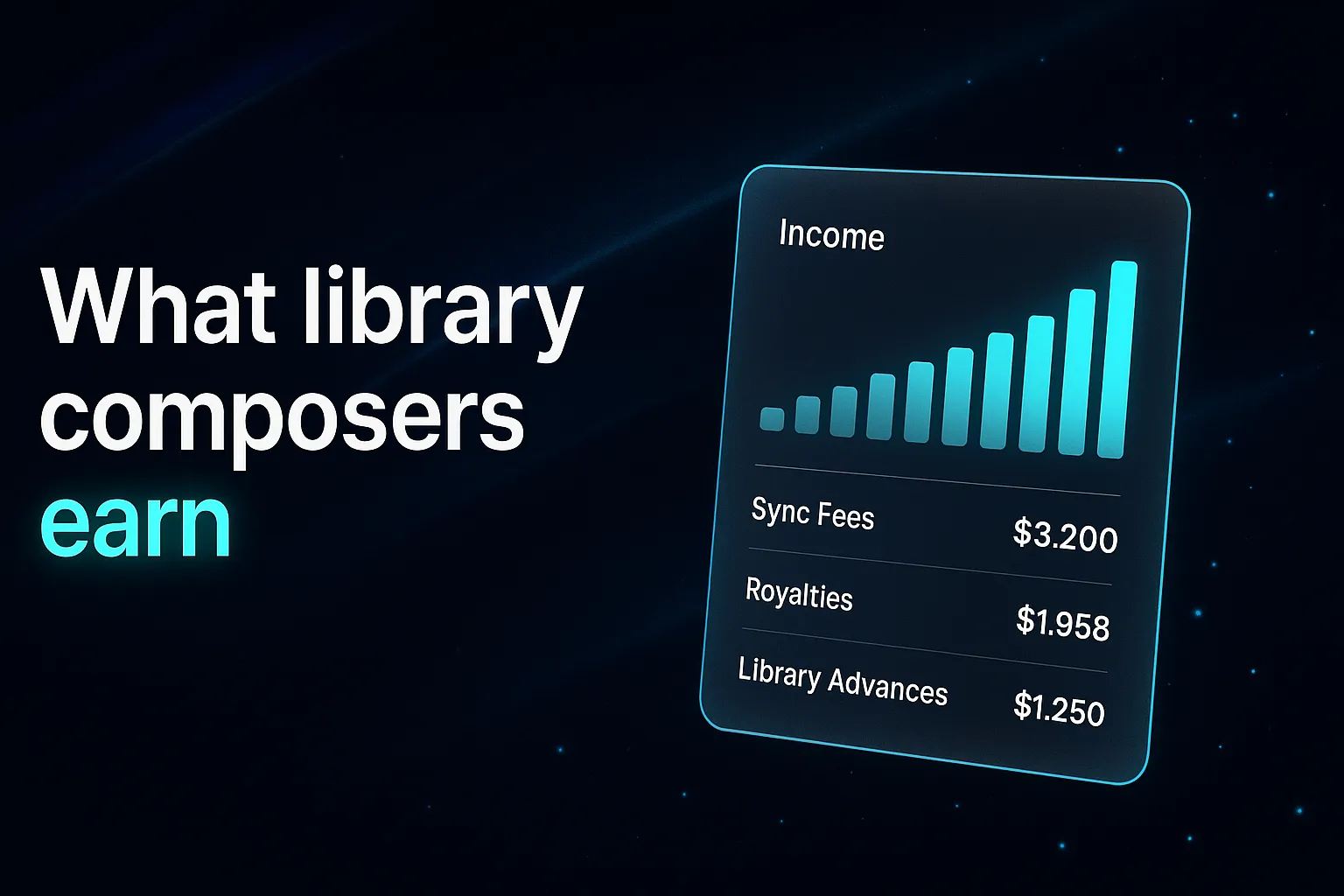
Where the money comes from
- Sync fees. The up-front sync fee paid when a cue is licensed into a project. This ranges enormously, from a few dollars on a royalty-free platform to five figures for a major trailer or national ad.
- Performance royalties. When placed music airs on TV, in cinemas, or streams, your PRO collects performance royalties driven by cue sheets. This is the long tail that pays for years after the placement.
- Library advances. Some libraries pay an advance against future earnings, especially on exclusive deals.
- Backend and bonuses. Master use, mechanical, and other rights depending on the deal.
The big mental shift: the sync fee is often the smallest part. The back-end royalties from a cue that keeps airing are where library careers compound.
What the numbers realistically look like
Income varies so widely that any single figure is misleading, but the shape is consistent. Here is the shape as a table, using the ranges I see on my own statements and in the deals that cross my desk at Tonal Chaos.
| Income stream | Typical upfront pay | Backend royalties | What drives it |
|---|---|---|---|
| Royalty-free and subscription libraries | $0 to $50 per license, at volume | Rarely | Catalog size. Thousands of small uses add up. |
| Curated production music libraries | $100 to $2,000 per placement | Yes, when it airs and the cue sheet is filed | Fit and volume. Broadcast use pays quarterly for years. |
| Network TV sync (featured) | $1,500 to $10,000 per episode | $500 to $2,000 or more per quarter | Prominence of the use and how often the show re-airs. |
| Network TV sync (background) | $500 to $2,500 | Smaller, still quarterly | Same, at a lower rate. |
| Streaming TV (Netflix, Hulu, Amazon, Apple TV+) | $1,000 to $5,000 | Limited | Streaming pays less backend than broadcast. |
| Trailer placements | $1,000 to $5,000 indie, $5,000 to $50,000 or more studio | None (promotional use) | Flat fees off trailer-house rate cards. |
| National ad campaigns | $10,000 to $100,000 or more | Usually none (all-in buyout) | Brand size and term length. |
The full fee ranges by project type are in the sync licensing rates guide.
- Royalty-free and subscription placements pay little per use but at volume. A large catalog earning small amounts across thousands of uses adds up.
- Curated and broadcast sync pays meaningfully per placement, often hundreds to low thousands per cue, plus royalties when it airs.
- Trailer and national ad placements are the high end, where a single cue can pay four or five figures up front plus strong back-end.
- Catalog size and age matter most. A composer with a few hundred well-placed cues earning royalties for years out-earns a newcomer with three brilliant tracks, almost every time.
The honest summary: most composers earn little in years one and two, and the ones who stick with it build a catalog that throws off income long after the work is done.
How to actually earn more
1. Write more placeable cues. Income tracks catalog size and fit more than raw talent. Volume of the right music wins. 2. File your cue sheets. Unfiled cue sheets mean unpaid royalties. This is free money composers leave behind. 3. Place the same cue in more places. Non-exclusive cues can earn from multiple libraries at once. 4. Keep alts and stems ready. More versions mean more placements per cue. 5. Pitch professionally and follow up on data. A higher hit rate on submissions compounds across a career.
Get more placements from the catalog you have
A lot of lost income is not missing talent, it is friction: cues that never get pitched, submissions that get archived, follow-ups sent blind. Tightening that is the fastest way to earn more from the music you already wrote.
DropCue helps you do it. Your cues live in a searchable catalog you can pitch in seconds when a brief lands, as branded album or playlist links that play instantly. Each track carries a licensing link so a buyer can clear it without friction, and per-recipient analytics tell you which cues are landing so you pitch the winners harder.
Frequently Asked Questions
How much do production music composers make?
There is no fixed salary. Income comes from sync fees, performance royalties, and sometimes library advances, and it varies from a few dollars per royalty-free use to four or five figures for a major trailer or ad placement. Most composers earn little early on and build a catalog that throws off royalties for years.
Do library composers earn royalties?
Yes. When placed music airs on TV, in cinemas, or streams, performance royalties flow through your PRO based on filed cue sheets. These back-end royalties are often larger over time than the up-front sync fee, which is why filing cue sheets is essential.
What pays more, trailer music or royalty-free libraries?
Trailer and broadcast placements pay far more per cue, often four or five figures plus royalties, but are harder to land. Royalty-free and subscription libraries pay little per use but at high volume. Many composers run both, premium cues with curated libraries and a broad catalog on royalty-free platforms.
How do I increase my income as a production music composer?
Write more placeable cues, file every cue sheet so you collect royalties, license non-exclusive cues in multiple places, keep alternate versions and stems ready, and pitch professionally with follow-ups informed by listen data. Income compounds with catalog size, placements, and a higher submission hit rate.