Guide
Music Licensing Links: Put a License Button on Every Track
 Marc Aaron Jacobs
Founder, DropCue · Composer
Marc Aaron Jacobs
Founder, DropCue · Composer
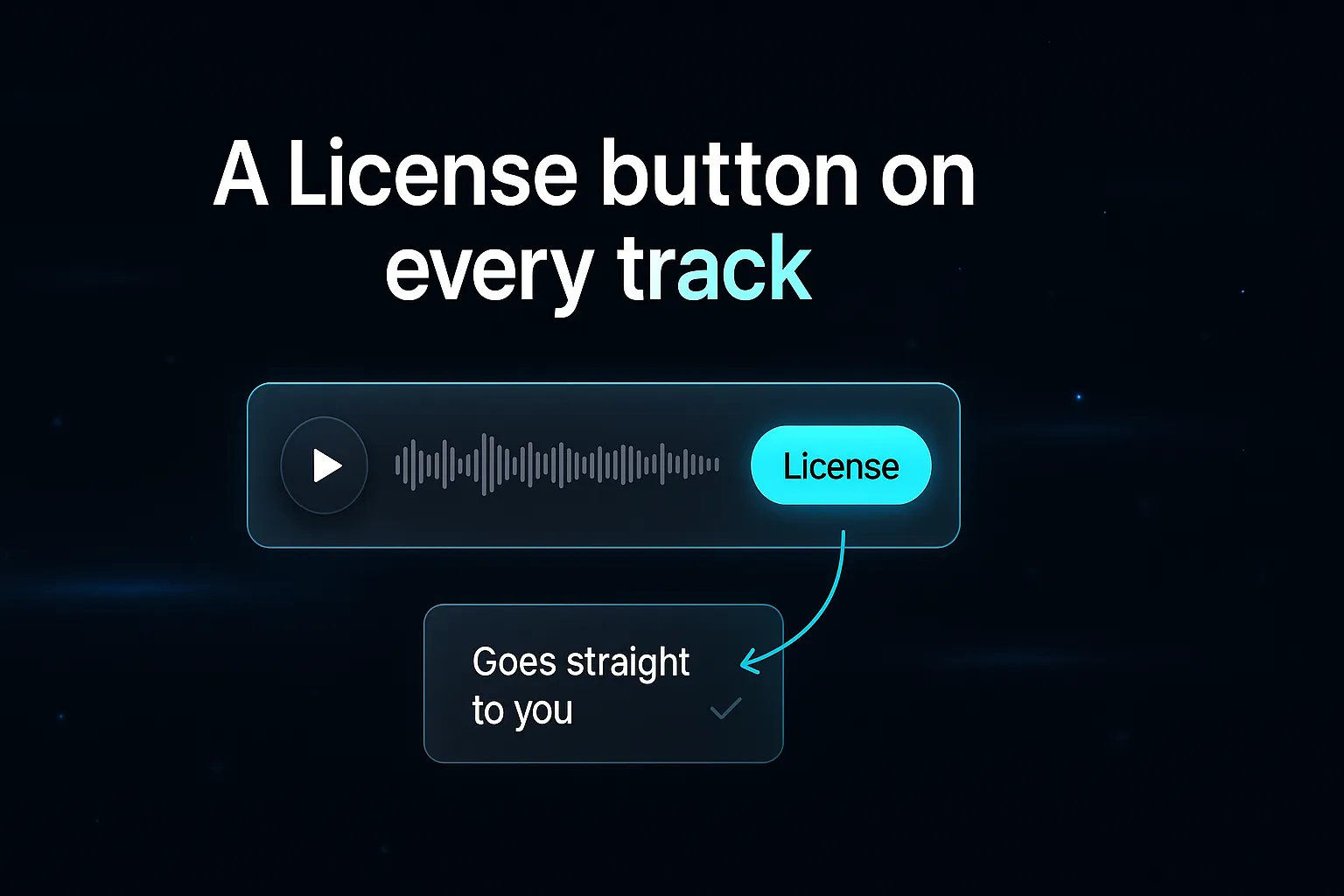
Most pitches die in the gap between "I like this track" and "how do I clear it." DropCue closes that gap with a per-track License button that sends your listener straight to wherever the cue is licensed.
Who this is for
Composers, production libraries, and publishers who want a clear, instant path from "a supervisor liked this" to "a supervisor licensed this." If you pitch sync, run a catalog, or share music that people are supposed to be able to clear, this is for you.
It is especially useful if your catalog is split across multiple rights holders, because licensing is per track. One cue can point to your publisher, the next to a library like APM or Marmoset, and the next to your own page.
Not for: artists who only share music for promo or feedback and never intend for the listener to license anything.
The audience-specific reality
Here is the moment that decides a sync deal. A music supervisor is cutting a scene, drops your track in, and it works. Now they have a choice: chase down who controls your cue, or use one of the ten tracks already sitting in a library they can clear in a single click. Every minute of friction you add is a minute that pushes them toward the easy option that is not you.
Most music sharing tools do nothing about this. They will play your track beautifully and then leave the listener with no obvious next step. The track gets a "love this, who has it?" reply a day later, if you are lucky, and momentum is gone.
Why DropCue fits this workflow
DropCue puts the next step right next to the track. You add a licensing link once, and a clearly labeled License button shows up beside that track everywhere it lives: on your shared playlists, your albums, your portfolio, and your catalog pages.
The link goes wherever you want. Point it at your own contact or checkout page and keep the whole deal in house. Point it at your publisher or a library and route the inquiry to the team that actually clears the cue. Because it is per track, a single playlist or album can send different cues to different rights holders, which is exactly what a real catalog needs.
DropCue does not sit in the middle of the transaction. It does not take a cut, broker the deal, or insert itself between you and your client. It just makes the path to licensing obvious and instant, and then gets out of the way.
The features that matter most
✓ Per-track License button
The button appears next to the exact track a listener just heard, at the exact moment they decide to act. No hunting, no "who controls this," no day-long delay.
✓ Point each link anywhere
Send the listener to your own page, your publisher, or a library like APM, Warner Chappell, Musicbed, or Marmoset. You choose who gets the inquiry for each cue.
✓ Apply across a whole playlist or album in one click
Self-published composers can point an entire album at their own page in seconds, instead of pasting the same link onto forty tracks by hand.
✓ Links travel with the track
The same License button shows up on shares, the portfolio, and catalog pages, so wherever a cue gets discovered, the licensing path is already attached.
✓ You keep the relationship
DropCue never brokers the deal or takes a fee. The client lands on your destination, so the conversation and the money stay yours.
Names you may know in this space
APM Music
One of the largest production music libraries. A composer represented by APM can point each licensing link to the APM track page so a supervisor clears the cue through the library that controls it.
Marmoset
A boutique sync licensing house. Composers on a roster like this can route licensing links to the agency so inquiries reach the licensing team instead of a personal inbox.
Tonal Chaos Trailers
A premium Los Angeles trailer music library founded by DropCue founder Marc Aaron Jacobs. A library like this attaches a licensing link to every cue so trailer editors can clear music the moment they hear it.
Pricing for this audience
Licensing links are part of DropCue, not an add-on. Plans start at $8 a month with annual billing (Artist, no track limit). Composers and libraries running larger catalogs move to a Pro plan, which scales by track count up to 20,000 tracks. There is no per-deal fee and no commission, because DropCue never sits in the middle of the licensing transaction.
Frequently asked questions
What is a licensing link?
A licensing link is a direct URL attached to a specific track that sends a listener to the page where that track can be licensed or purchased. In DropCue it shows up as a License button next to the track on your shares, portfolio, and albums. See the full definition in our glossary entry on licensing links.
Does DropCue take a cut of the licensing deal?
No. DropCue does not broker deals or take commission. The License button sends your client straight to the destination you set, whether that is your own page, your publisher, or a library. The deal and the fee stay between you and the licensee.
Can different tracks point to different rights holders?
Yes, and this is the point. Licensing is per track, so one playlist or album can send different cues to different publishers, libraries, or your own page. That matches how real catalogs are actually split.
Where does the License button appear?
Everywhere the track is shared: on your shared playlists, your shared albums, your public portfolio, and your catalog pages. Set the link once and it travels with the track.
Can I apply one licensing link to a whole album?
Yes. You can set a link on a single track or apply the same link across every track in a playlist or album in one click, then override individual tracks that belong to a different rights holder.